

ONE YEAR LATER: Lessons Learned from Salvaging Rare Heritage Bricks from the Danforth Baptist Church

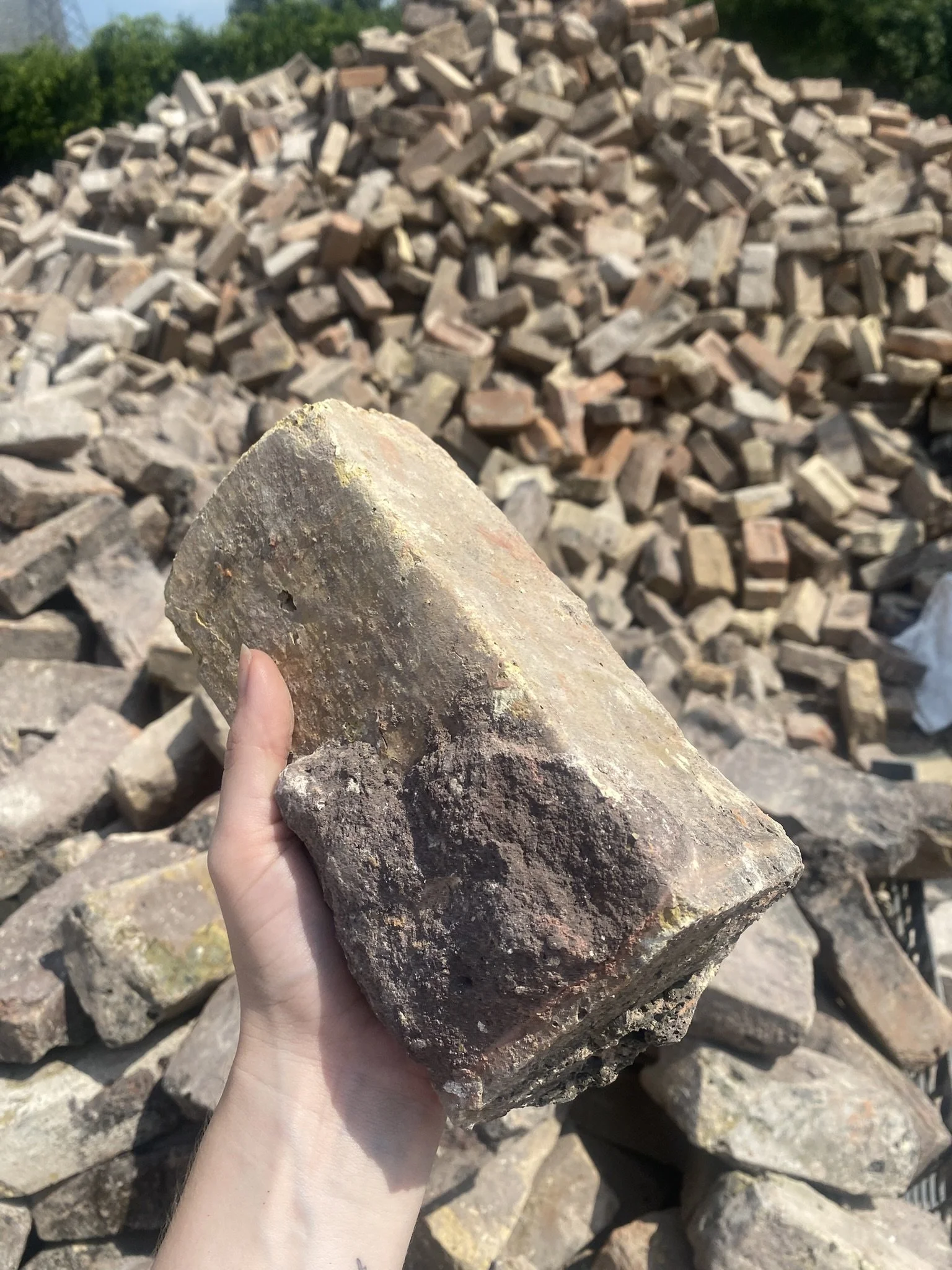
In June 2025, one of our team members was driving down Danforth Avenue in Toronto’s east end and witnessed bricks piling up from the demolished walls of a century-old church. Although undeniably for a good cause – Assembly Corp.’s development of affordable senior housing integrated with retained portions of the church – it’s always hard to see neighbourhood landmarks like this come down. As heritage masons who spotted thousands of rare clinker bricks amongst the rubble, we couldn’t just standby. After a few phone calls and a scramble to make room at our storage yard, we were able to get in touch with the right people and negotiated a deal to intercept the materials. Instead of being shipped off to landfill, over 200 tonnes of material arrived on our property over the next few weeks… and we’ve been cleaning and learning ever since.
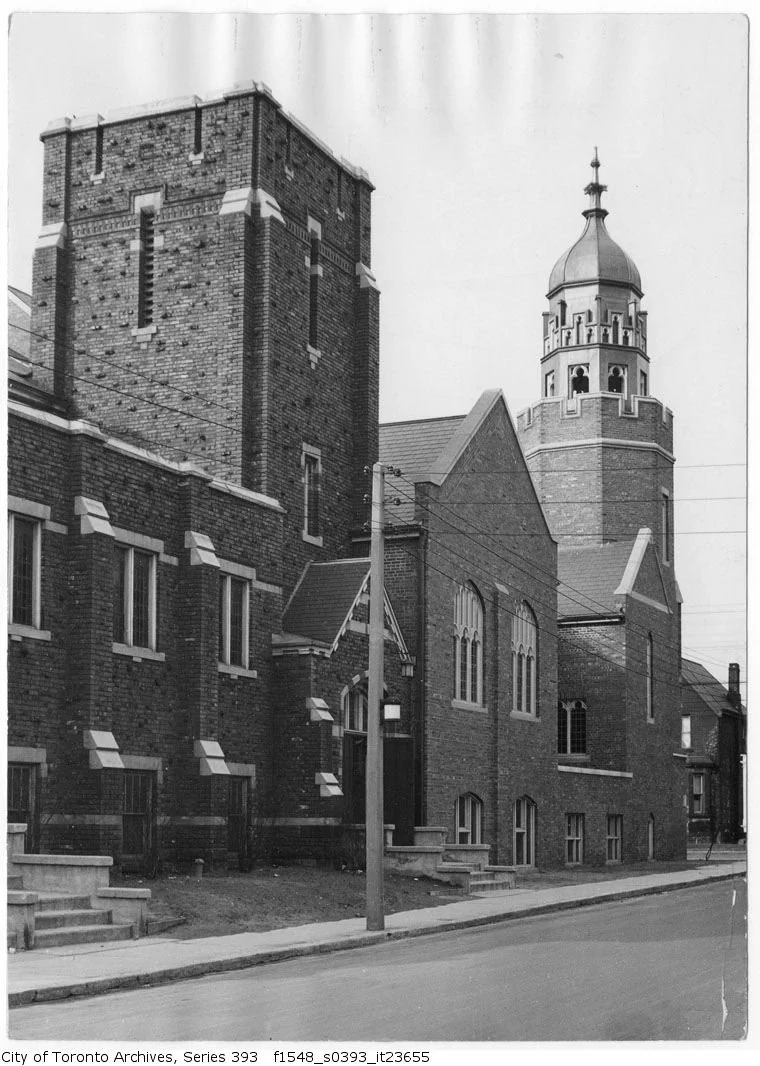
The Chester Baptist Church and Sunday School, photographed in 1932. Courtesy of the City of Toronto Archives.
We at Arcana Materials aren’t the only ones working in deconstruction and salvage in the Greater Toronto Area, but it’s far from the norm and still has a long way to go before the industry shifts to considering deconstruction as a viable alternative to mechanical demolition. Here is a reflection on this large-scale salvage effort.
ABOUT THE BUILDING
The Danforth Baptist Church was originally known as the Chester Baptist Church; its Sunday School wing was designed by architect John Francis Brown and completed in 1911, with the remainder of the church building completed by 1931 and designed by architect John Wilson Siddall. Both portions used a distinct mix of colourful clay bricks (including some from iconic brick manufacturer Don Valley Brick Works) to create a Gothic Revival building with some Arts & Crafts texture. The integration of clinker bricks’ and their dark, warped, and uneven characteristics were celebrated during Toronto’s Arts & Crafts peak decades (1910s-1930s) and used to add rustic texture and deliberate irregularity to structures.
OUR EFFORTS
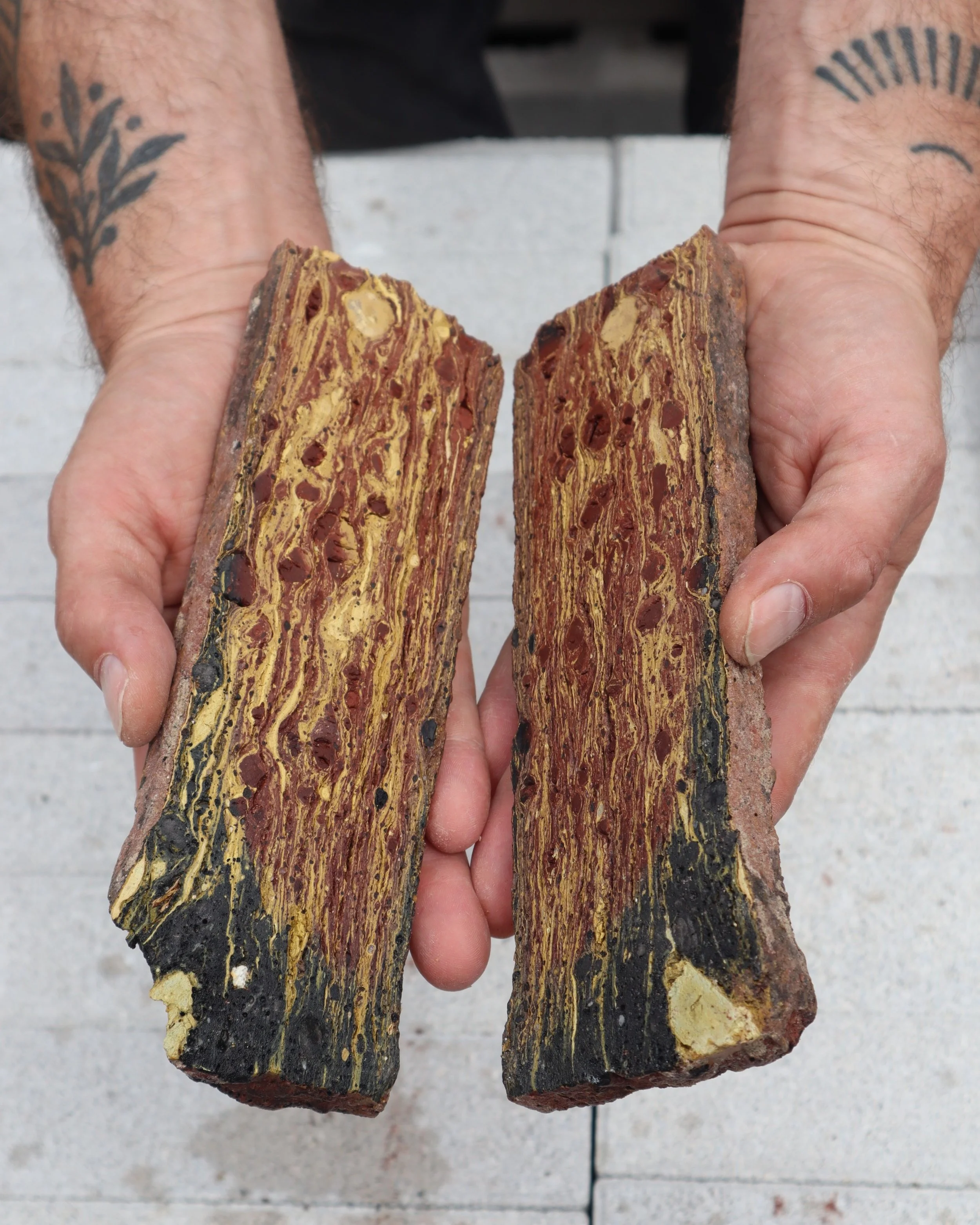
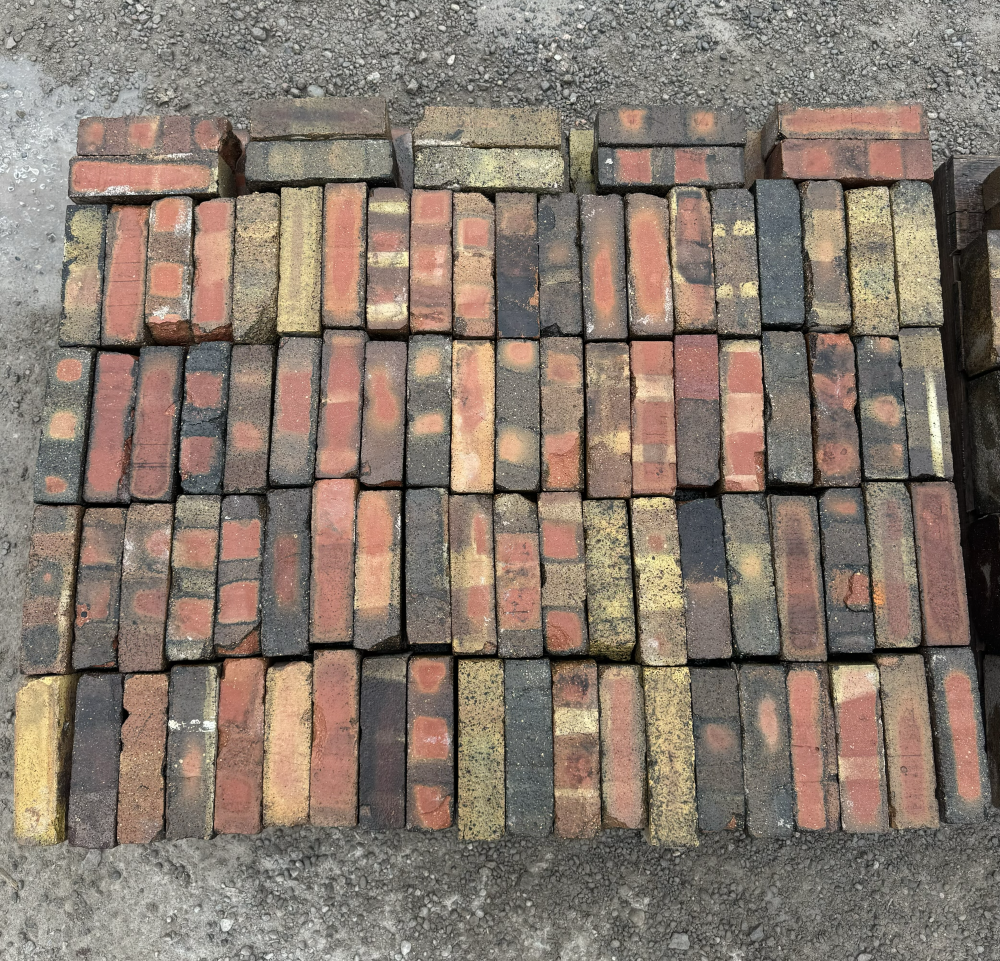
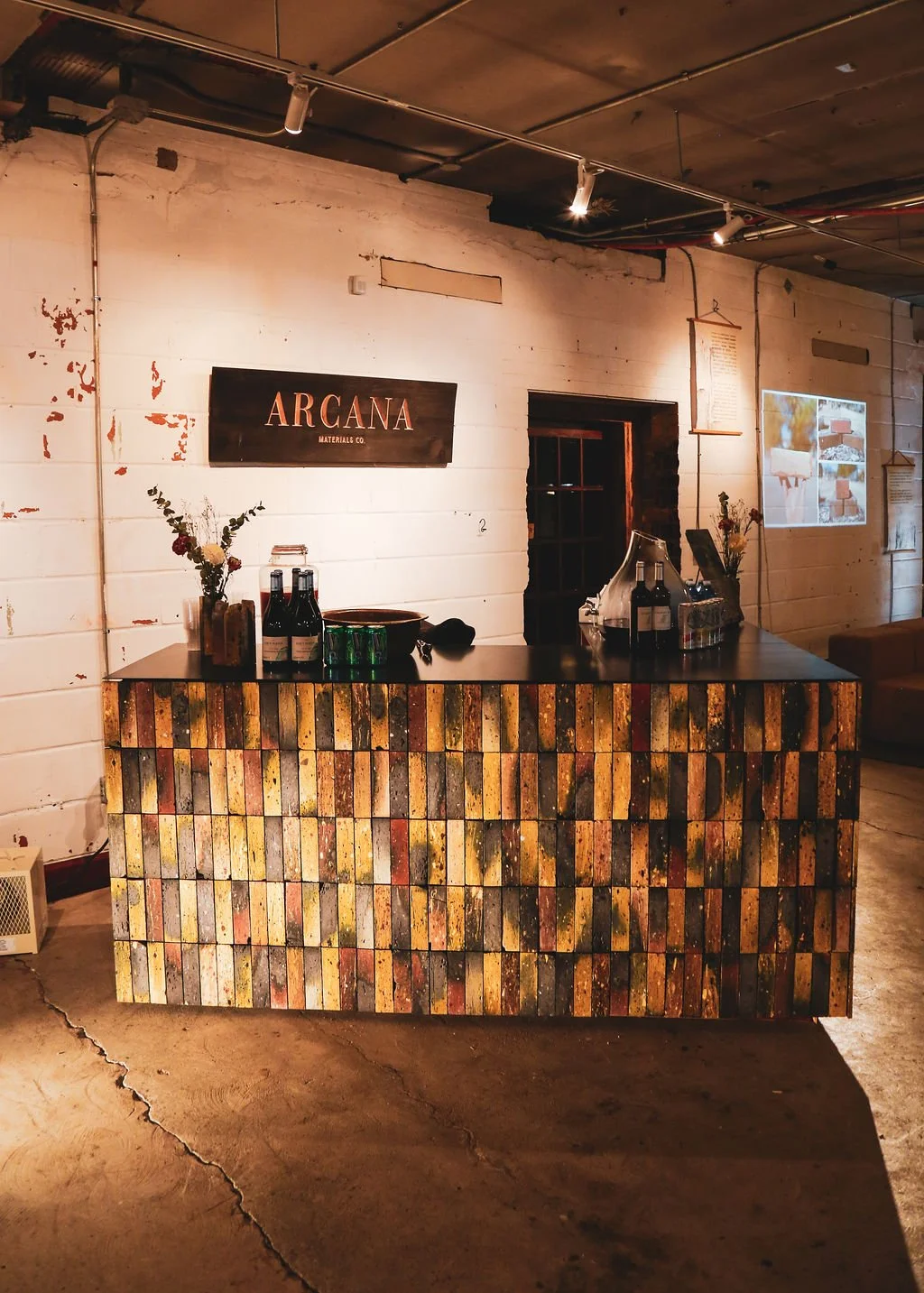
The material arrived to our yard in disposal bins, and from there our crews worked for countless hours to clean, process, and quality-grade all of the salvageable brick. Much of this cleaning was done by hand, as well as a few weeks of trying out a Brick Recyc machine – designed to mechanically grind away old mortar without damaging the bricks. As the weeks progressed, the pile of broken/unsalvageable bricks was growing faster than our skids of saleable materials, and we began to experiment with brick crushing and gabion baskets to try additional ways of reusing masonry waste in landscape applications. We also explored turning the clinkers into a veneer tile product with fascinating results, which led to a DesignTO furniture collaboration with Daniel Gruetter. Now, a year later, we’ve almost completely cleared the pile, and here are the results:
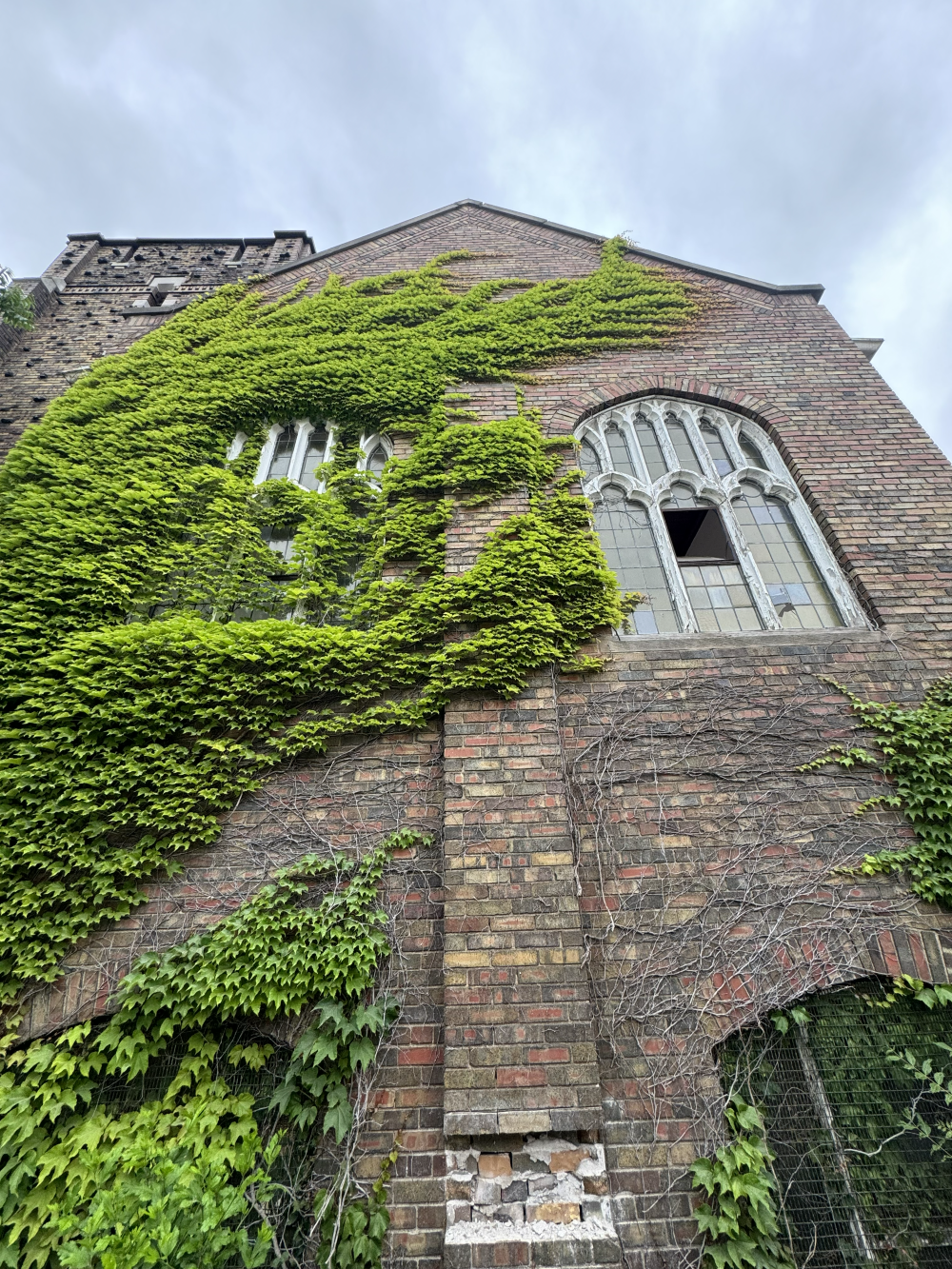

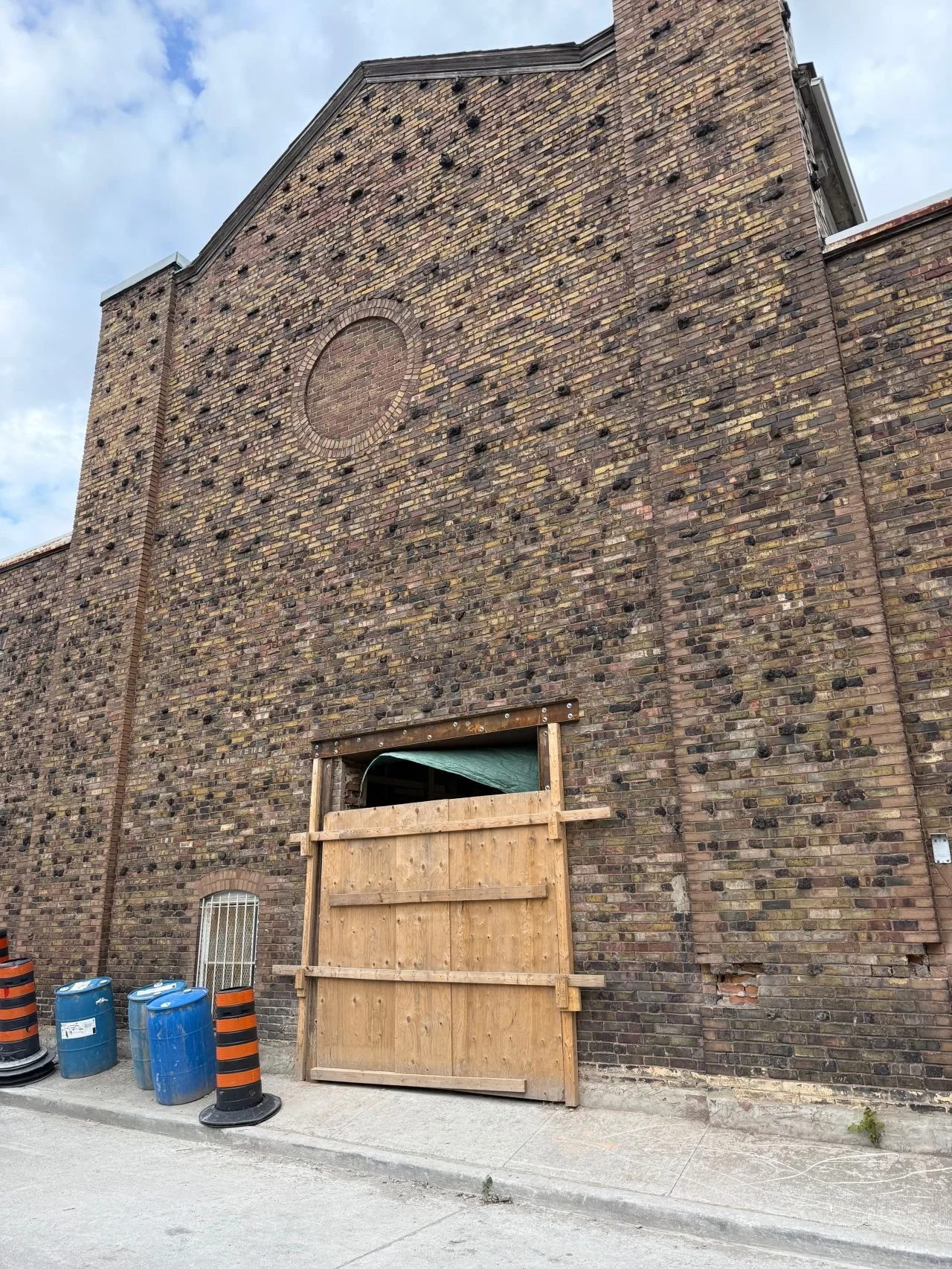

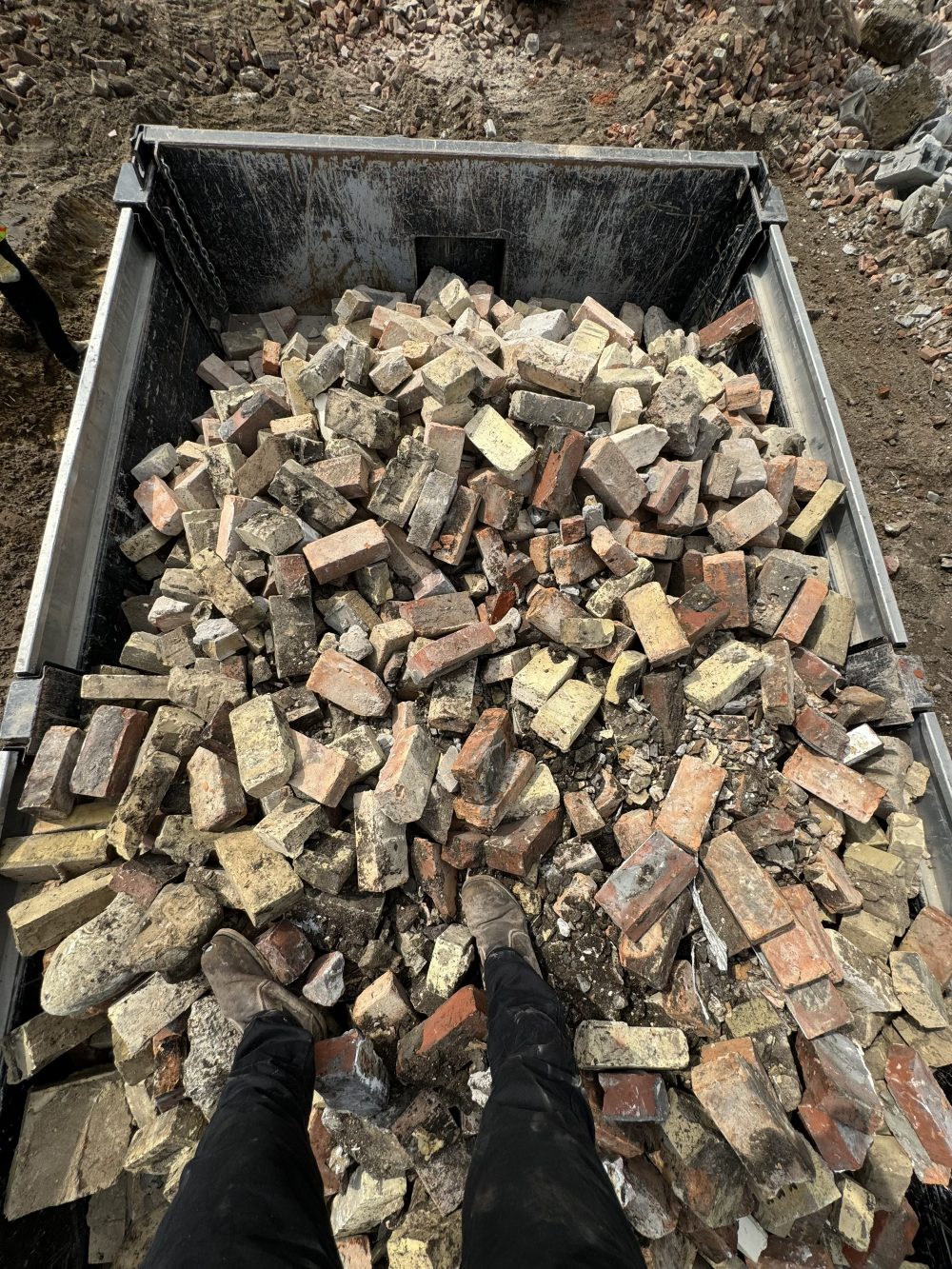
THE STATS:
200 tonnes of mixed brick and masonry rubble received
500+ man hours of cleaning
THE YIELD:
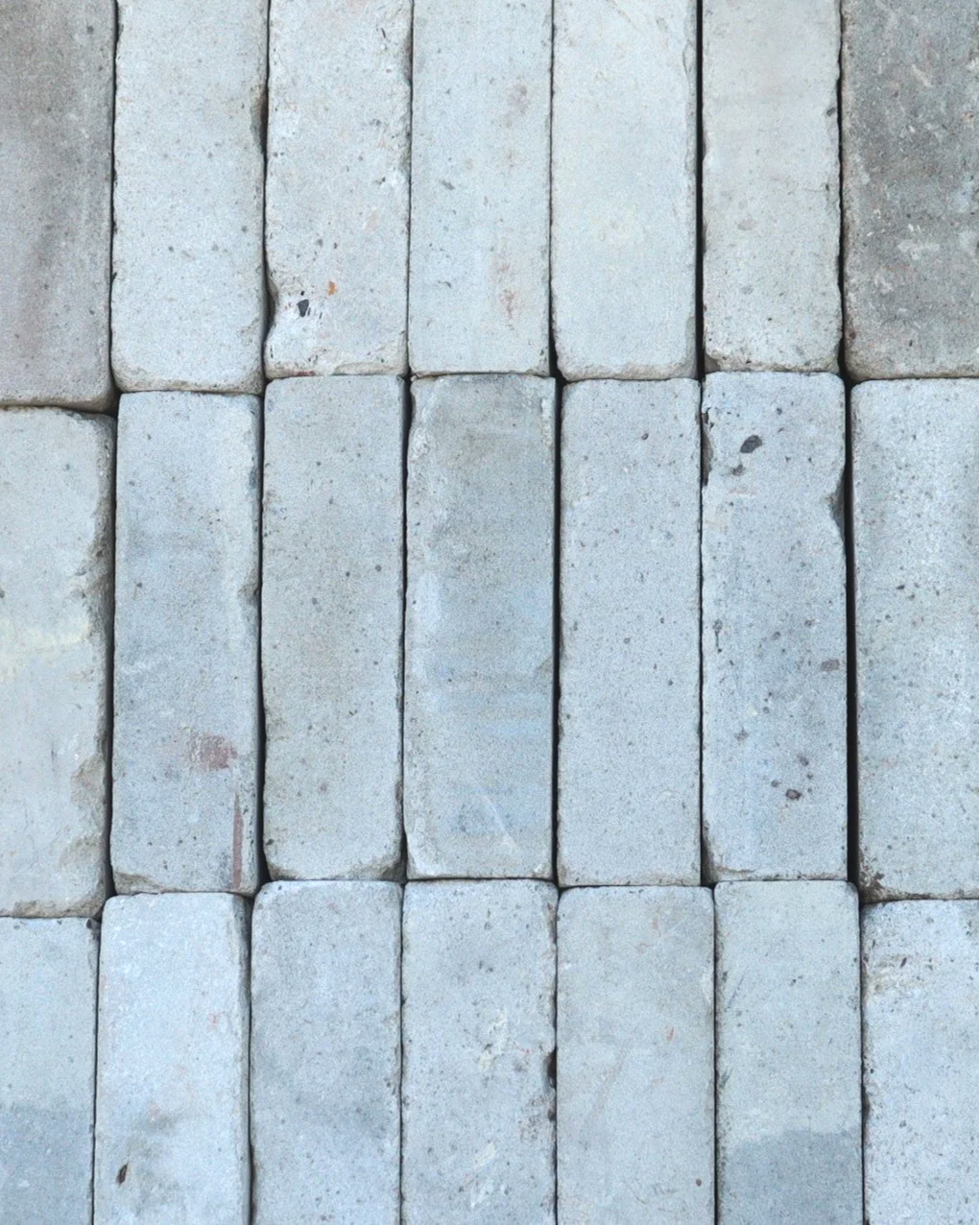
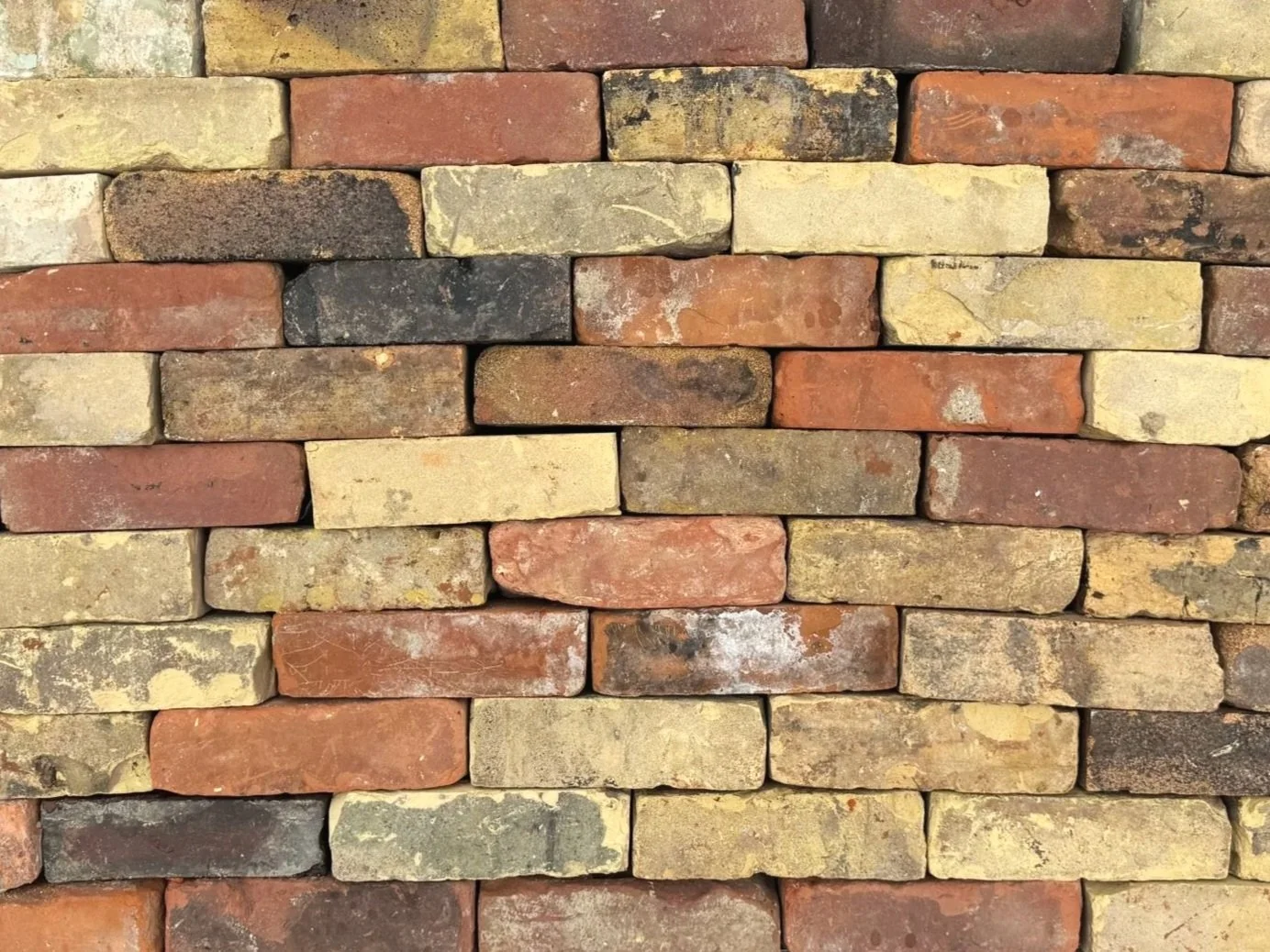
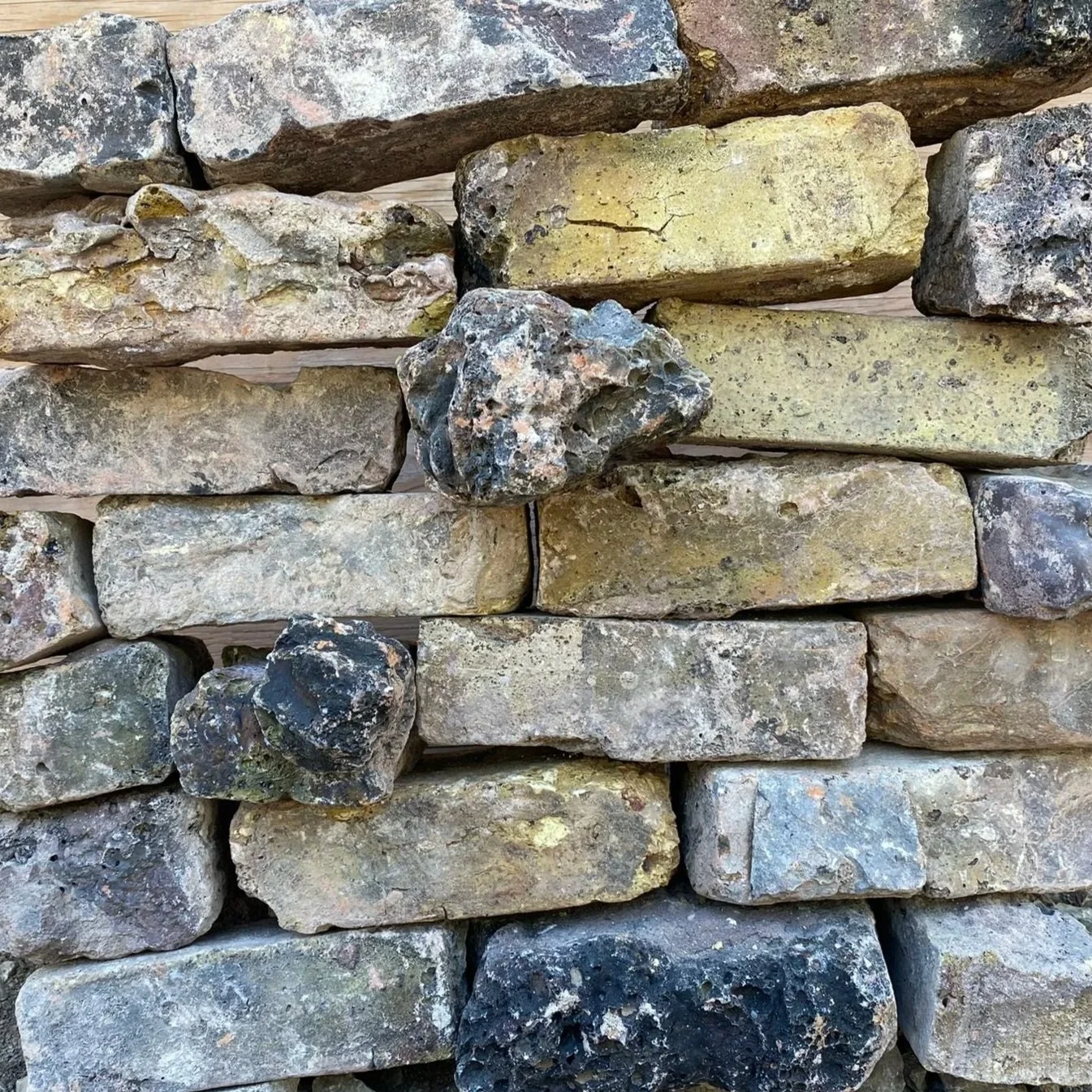
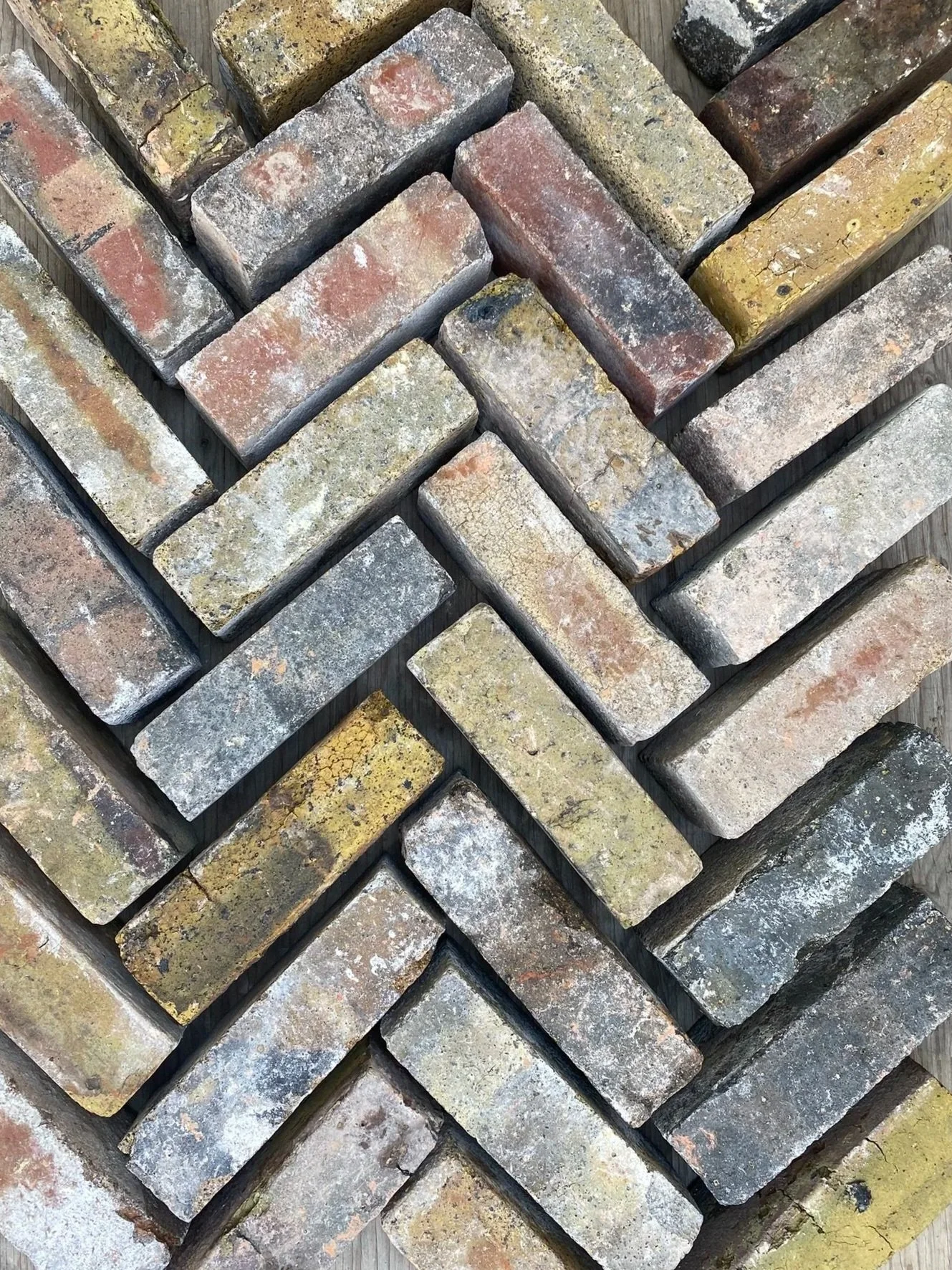
3000 clinker bricks
15000 B-Grade/Tumbled bricks
4000 A-Grade Bricks
1800 Concrete Bricks
Dozens of cubic yards of broken brick rubble
THE SALES:
Of the above, we’re proud to say that most of this stock has been sold or is reserved for summer 2026 projects, almost all for new build/contemporary designs that saw the value in adding character through heritage materials. We’ve made approximately $15000 in revenue with another $50,000+ pending.
However, despite the sales success, was this worth all the labour and storage costs? What could have gone better?
In an ideal world, architectural salvage is most effective when deconstruction experts are brought into the conversation early. Consultants can pre-evaluate and inventory potential material yields so that the building can be taken apart efficiently and there is a predetermined plan for what materials will be salvaged or recycled. Deconstruction teams would be given plenty of time to mobilize on site and carefully remove materials to minimize damage, and materials would be cleaned on-site before being sent on to properties where they will be reused right away.
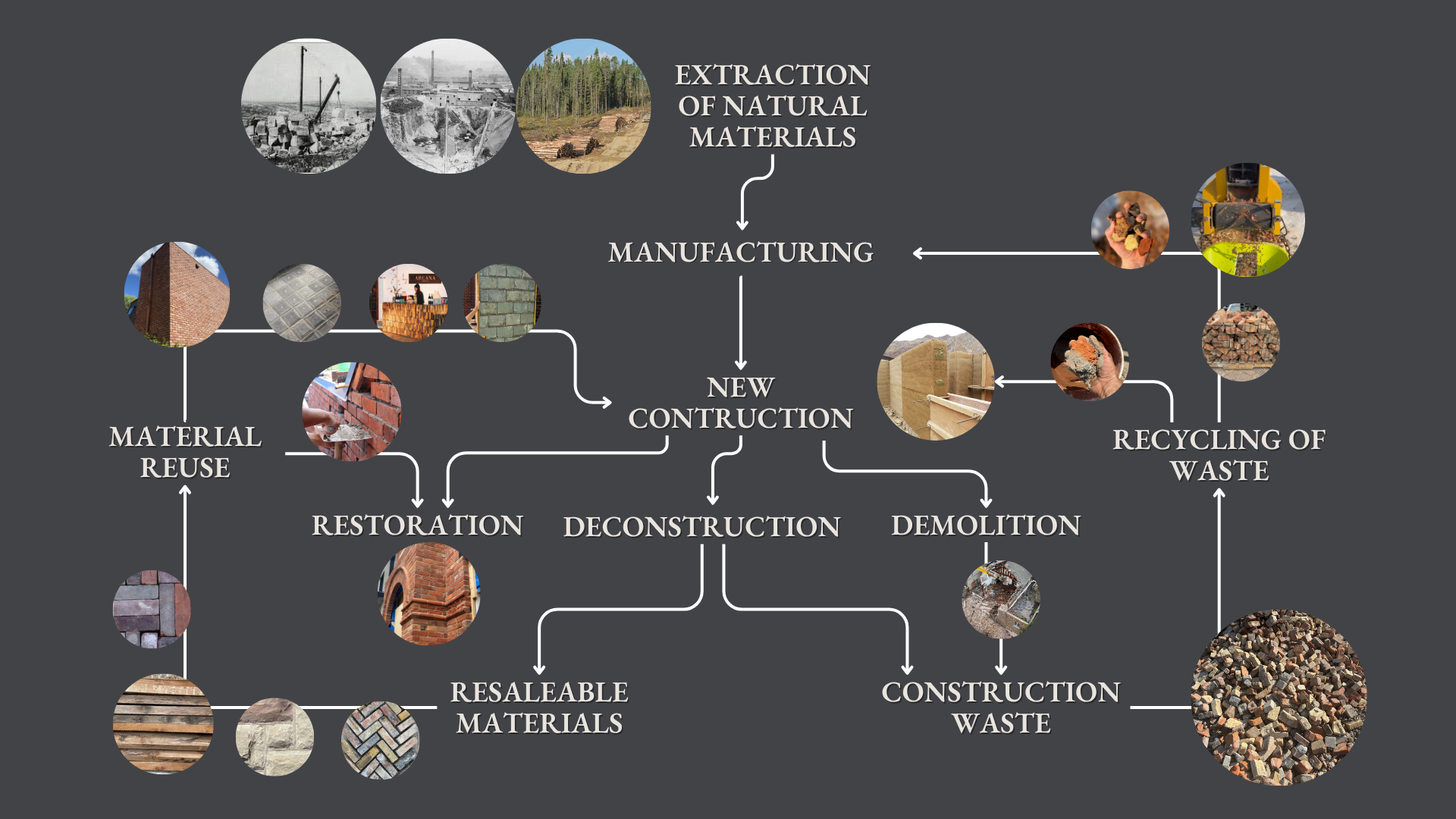
A visual of different paths that masonry and naturally-derived historic materials can move within the Circular Economy.
Receiving the bin loads of mechanically demolished bricks from the Danforth Baptist Church was far from this scenario, even though we were still able to achieve our goal of reducing construction waste and bringing unique materials back to market. There was still more volume of material waste than saleable products, and more labour costs than income. However, until deconstruction gains momentum and incentive amongst builders, designers, property owners, and planners, more often than not this is the compromise if we want to salvage any of this irreplaceable masonry.
What can be done?
Advocate for deconstruction wherever possible for historic buildings that are slated for redevelopment. There are resources being developed that outline benefits of deconstruction – not only for the material value, but also tax breaks, reduced construction noise, positive press and more – and companies like ours that are sharing what we do and working our way through case studies like this one to see not only where the challenges lie, but also to develop the market for reclaimed materials. We are passionate about the bricks that we sell and have no plans to give up the fight. Join us!
Follow us
Follow us on social media for daily stories, before-and-afters, experiments, satisfying bricklaying, and much more!
Cosmic is named for its outer-worldly marbling and is sourced from the former Danforth Baptist Church and Sunday School (originally Chester Baptist Church) in Toronto’s North Riverdale neighbourhood: a 1911 Gothic Revival building that was expanded in 1931 and partially deconstructed in 2025 after over 100 years of serving the Danforth community. We were able to save 25 tons of this special material from ending up in a landfill.
Cut from clinker bricks - known for their distinct irregularity caused when clay bricks are exposed to excessive heat during the firing process in a kiln - this product is very strong and contains a range of colours when cut open. Each brick is unique! Suitable for wall or floor tiles, fireplaces, landscaping, and other residential and commercial projects.
Price varies based on cut type and finish level, please inquire for details.